
Lake Mead Historic Aircraft Wreck
Dive the B-29 Beneath Lake Mead
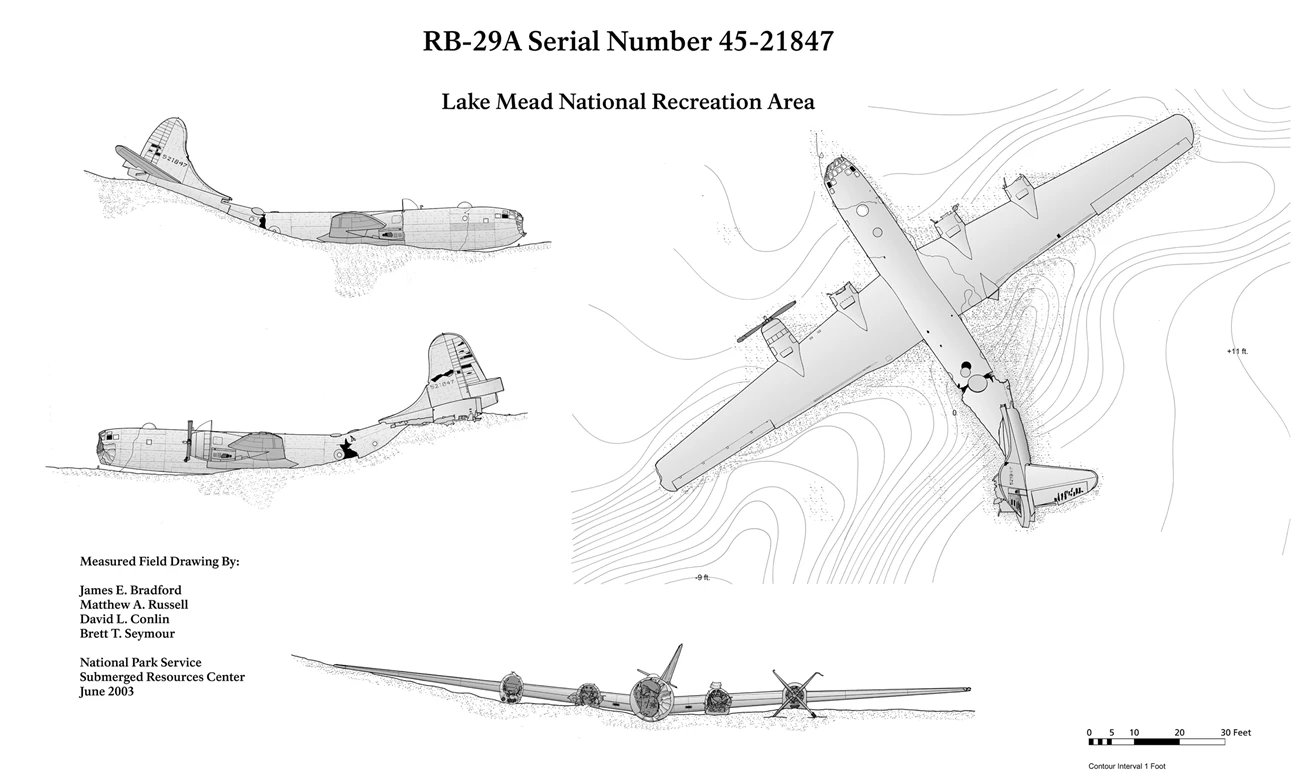
Beneath the waters of Lake Mead rests B-29 Superfortress 45-21847, a rare flying laboratory lost during an atmospheric research mission in 1948.
Today, the aircraft offers qualified divers an extraordinary opportunity to encounter aviation history where it came to rest.

.jpg)
The Mission
More Than a Bomber
Although the B-29 is best known as a World War II heavy bomber, the aircraft beneath Lake Mead was serving science.
After the war, the aircraft was converted into a high-altitude flying laboratory. Its crew conducted atmospheric and cosmic-ray research designed to improve scientists’ understanding of the upper atmosphere and emerging navigation technology.
On July 21, 1948, the aircraft completed its scheduled measurements and descended over Lake Mead. Believing they were approximately 400 feet above the water, the pilots continued lower. At about 12:30 p.m., the B-29 struck the lake at approximately 230 miles per hour.
All five crew members escaped. They watched from life rafts as the aircraft slipped beneath the surface and disappeared for more than half a century.
Aircraft File
- Aircraft
- B-29 Superfortress
- Serial Number
- 45-21847
- Delivered
- September 13, 1945
- Length
- 99 feet
- Wingspan
- 141 feet
- Mission
- High-altitude atmospheric research
A Remarkable Journey
From Flying Laboratory to Protected Dive Site
Delivered to the Army Air Force
Serial number 45-21847 was built in Wichita, Kansas, under the final B-29 production order issued by the Army.
Lost During a Research Mission
The aircraft struck Lake Mead after completing a high-altitude atmospheric research flight.
Confirmed by the National Park Service
After decades beneath the lake, reprocessed mapping data helped the National Park Service confirm the aircraft’s location.
A Protected Cultural Resource
The B-29 is carefully monitored and managed so divers can experience the wreck without sacrificing its preservation.
The Dive
A Dive That Demands Control
Access may have changed as Lake Mead’s water level has changed, but this remains a sensitive historic wreck rather than a casual sightseeing dive.
Buoyancy and Trim
Divers must be able to hover, descend and maneuver without contacting the wreck or disturbing the bottom.
Depth and Gas Planning
The dive plan, breathing gas and allowable bottom time must reflect current depth and conditions.
Equipment Readiness
Divers should be completely familiar with their equipment, exposure protection and emergency procedures.
Lake levels, depth, temperature, site access and dive requirements can change. Las Vegas Scuba Academy will confirm the required certification, experience, equipment and dive plan for each scheduled opportunity.
Prepare for the B-29
Is This Dive on Your List?
Talk with an instructor about current access, required experience, training options and upcoming Lake Mead diving opportunities.